Sponsored by adidas

Danny MacAskill. Greg Minnaar. Vero Sandler. Thomas Genon. Martin Søderstrøm. Five athletes at the top of their respective fields in mountain biking, and five professional riders who have one thing in common – the shoes on their feet. It’s no coincidence. Five Ten has become a byword for quality, durability and, most importantly, confidence-inspiring grip – whether it’s a UCI Downhill MTB World Championship or Crankworx Slopestyle run. But Five Ten first gained fame as a climbing shoe brand. So how did mountain bikers get turned on to Five Ten shoes with their high-friction Stealth Rubber soles?

The man behind Five Ten
In the early 1980s, a talented climber named Charles Cole was living at Search and Rescue site in Yosemite’s Camp Four. He’d developed a solid reputation for solo-first ascents on the Valley’s big granite walls. After a successful climb up El Cap, he learned that his father had suffered a stroke and heart attack. While Cole had been focused on full-time climbing, his father’s illness caused him to pivot direction away from the climbing bum lifestyle to entrepreneurship. At age 30, he stepped up as the family breadwinner.
The key to success was to develop a product that was not somewhat better but significantly better.
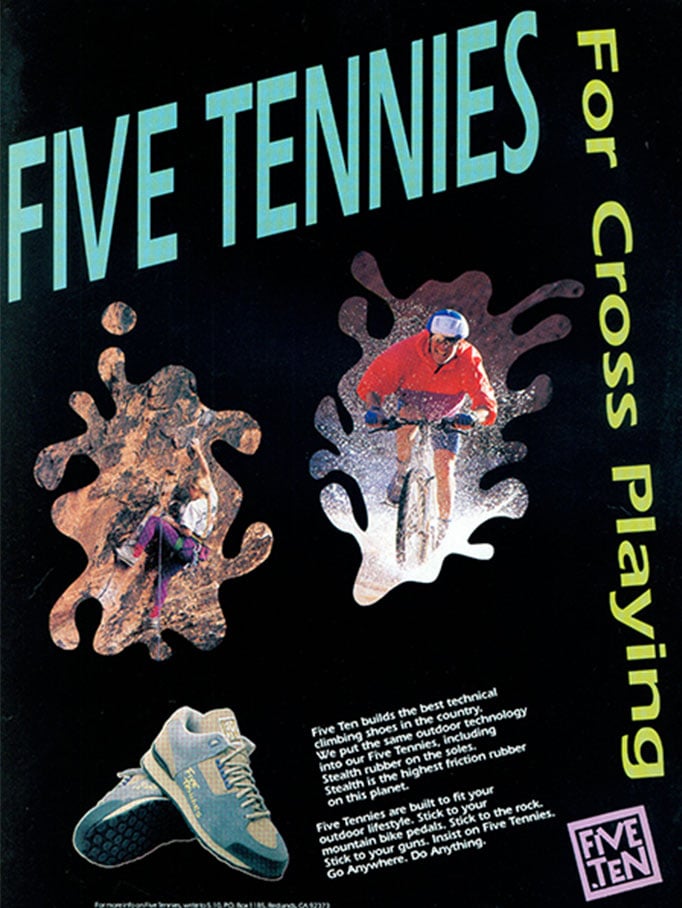
Despite rock climbing being Five Ten’s focus – its name is inspired by the sport’s U.S. grading system, wearers soon realized that the Stealth rubber-soled shoes had applications beyond the vertical. Climbers who were using mountain bikes to reach their destinations found that Five Ten approach shoes gripped to the pedals as well as the clipless cycling cleats that were growing in popularity, And they only needed to buy one pair of shoes…. Charles Cole marketed the Five Tennies as “go anywhere, do anything” shoes “for cross playing” and “built to fit your outdoor lifestyle.”
By the mid ‘90s, Five Ten shoes had appeared on the covers and pages of Mountain Bike and Mountain Bike Action in the US. The TV Show, “Modern Marvels” devoted an episode to Stealth rubber and called it “stickier than duct tape” and included footage of people climbing and biking. Stealth became the rubber of choice for not only climbers, but Hollywood stuntmen, as well as the world’s best base jumpers and wingsuit flyers.
Charles Cole liked mountain biking and was an early adoptor. He was introduced to Australian downhill mountain bikers Nathan Rennie and Chris Kovarik by their team manager, Jeff Steber. An eccentric maverick like Cole, Steber was the founder of Intense Cycles, a mountain bike brand that has revolutionized riding technology many times over.
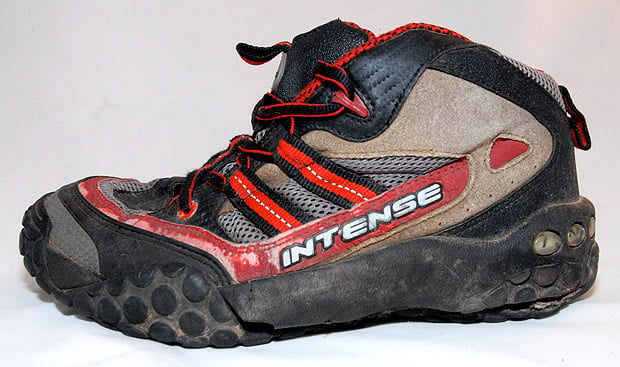
Five Ten had a solid reputation within the growing mountain bike community, but Cole always wanted to make product that advanced the sport. He set about designing and developing Five Ten’s first prototype mountain bike-specific shoe. Kovarik and Rennie were the first athletes to test the pioneering designs, which were labelled as Intense but featured Stealth soles.
The Intense shoes with the Stealth rubber soles stood atop a UCI Downhill MTB World Cup podium for the first time – and the DH world took note. Chris Kovarik demolished the field at the first World Cup of the season, winning by a margin of 14 seconds in a wet and wild Fort William, Scotland. The win went down in history, with a record that still stands almost 20 years later.
Kovarik backed up his scorching Scottish run the following weekend, securing back-to-back wins for the Five Ten prototype in Maribor, Slovenia. It would be another Aussie though who secured Five Ten’s first World Championship.
Aged just 17, Sam Hill was given an as-yet unreleased pair of Five Ten Impacts. The combination of Stealth rubber and Hill’s signature flat pedal riding was a match made in heaven and he was victorious in the 2002 Junior Downhill MTB World Championships in Kaprun, Austria. A year later, he defended his title in Lugano, Switzerland.


2009
The G.O.A.T
With the flat pedal shoe revolutionized, Charles Cole set his sights on the clipless shoe market. Athletes were at the heart of the brand’s shoe development from day one. Cole looked to collaborate with someone who would put the “athlete” into an athlete-driven design and put prototypes through the most brutal of field tests.
Enter Greg Minnaar. A Downhill MTB World Champion and three-time Downhill MTB World Cup overall champion, the 27-year-old South African was already a dominant force in downhill.
The Five Ten Hellcat, first released in 2011, was the result of the partnership. The shoe provided the all-conditions comfort of the Impact with the iconic Stealth Dotty sole, while leaving a recess for the SPD cleat. Now in its third iteration, it is the shoe that has propelled Minnaar to his status as the greatest of all time – including three more World Championships and a record 22 World Cup wins.
Despite all of the success Five Ten was having in downhill mountain biking, the footwear hadn’t quite claimed the overall cult status in the broader mountain bike world that it enjoys today. The signing of Danny MacAskill changed all of that. The Scottish street trials riding sensation had already been a viral hit with the first video he released – “Inspired Bicycles” – in April 2009. All of his future clips, edits and films would help take Five Ten into the homes and onto the screens of millions.
At the start of the 2010s, the small South Californian shoe brand was going toe-to-toe with the biggest names in action sportswear and winning. Despite having a mere 37 employees, the family-run business was punching well above its weight class. German sportswear giant adidas took notice.
Like many entrepreneurs, Cole was reluctant to give up the reigns, but he saw the advantages that synergies between adidas and Five Ten could offer.
Five Ten had always recognized the needs of the female athlete. In 1992 it had brought to market the first-ever women’s specific rock climbing shoe. While many brands focused solely on the male market (where there were the most sales), Five Ten was an early sponsor of female athletes in both climbing and mountain biking. The brand had always been closely aligned with grassroots events and was an early supporter of women’s bike camps. The release of the film Vision showed 5.10’s commitment to the growth and reach of mountain biking across gender lines. The pioneering female-led freeride film focused on Vero Sandler, and featured Kade Edwards, Tahnée Seagrave and Casey Brown. It showed that mountain biking is an inclusive sport and that newcomers can progress by riding with a supportive group in a non-competitive atmosphere.
Mountain bikers have always been in touch with nature. They see first-hand the impact that man-made materials have on the environment. But many brands have historically been hesitant to invest in sustainable supply-chain and manufacturing practices and environmentally friendly materials. One of Cole’s dreams when he sold his company to adidas was to see Five Ten lead a new generation of climbers and mountain bikers who believed in making the world a better place. Sadly, he didn’t live to see Five Ten’s launch of sustainable clothing and footwear, but he’d have been proud that the brand was the first-ever to offer a head-to-toe sustainable ensemble for mountain bikers.
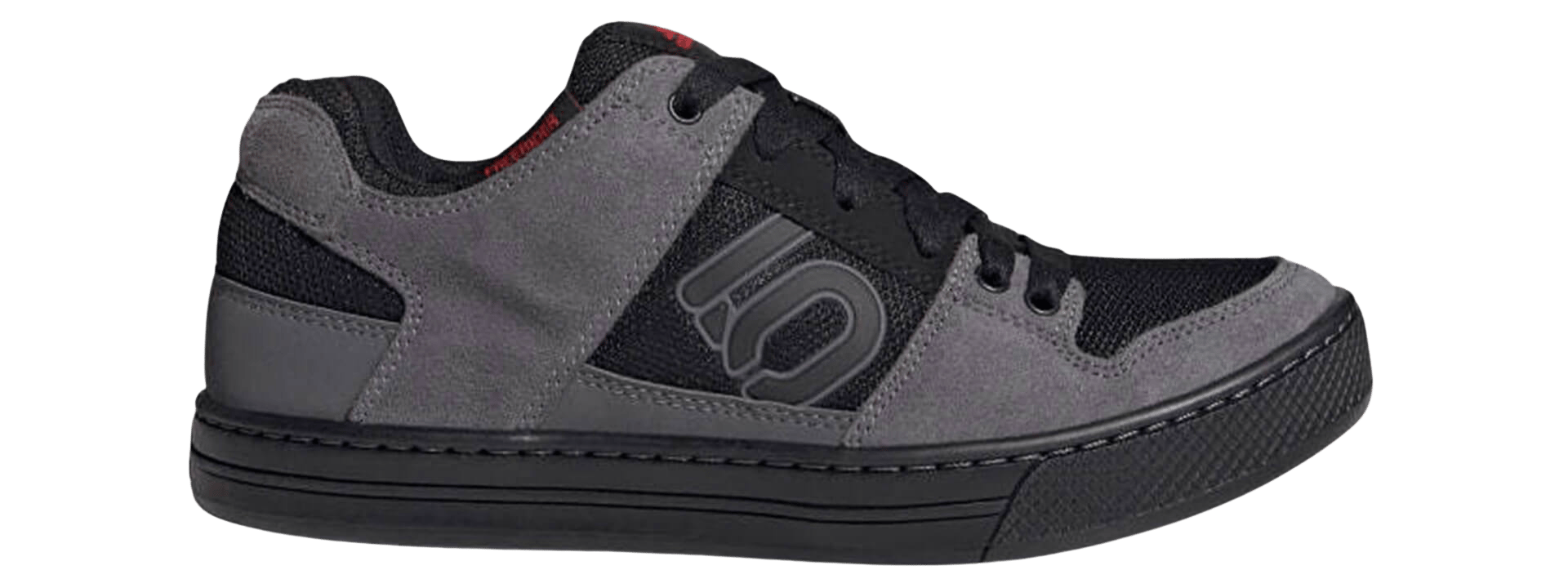
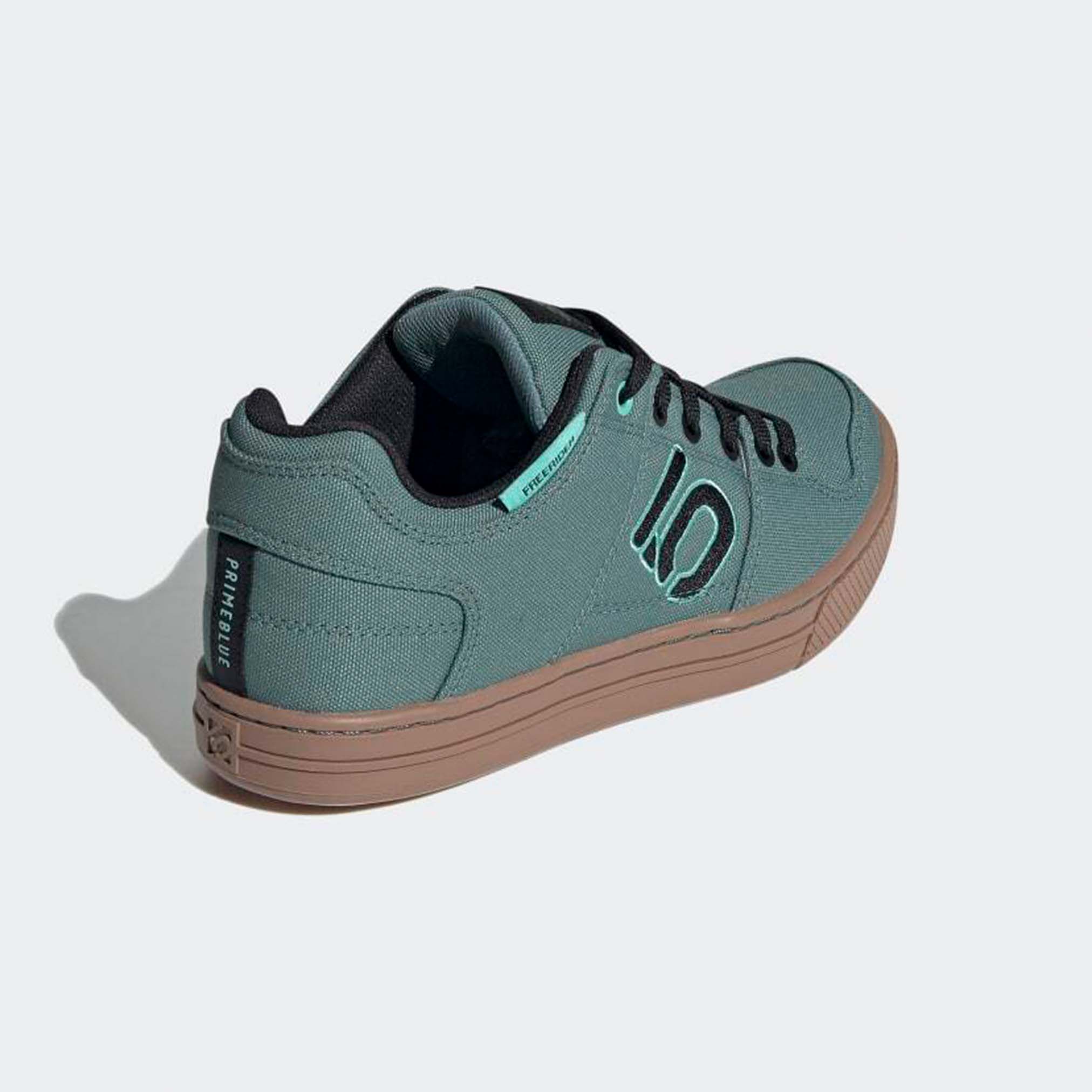
The Primeblue versions of the iconic Freerider and Freerider Pro used recycled polyester, sustainably sourced cotton and high-performance recycled materials made in collaboration with Parley Ocean Plastic, created from upcycled marine plastic waste that is intercepted on remote islands and beaches and coastal communities. Riders finally had the option to wear shoes, shorts, pants, T’s and jerseys that focused on earth-friendly materials and manufacturing practices without compromising performance.
Five Ten’s first sustainable line is just the beginning. By 2024, Five Ten and the wider adidas brand aims to completely phase out the use of virgin polyesters and create all shoes and apparel from 100% recycled materials. By aiming for such an ambitious target, Five Ten is once again setting a precedent that will revolutionize the worlds of mountain biking and climbing. The brand is dedicated to staying true to its “athlete-driven” and “brand of the brave” roots, as well as its commitment to innovation, technology, sustainability and community spirit.
Five Ten has been at the forefront of mountain biking since the first bikes hit the trails. Not surprisingly, the brand’s passion for performance, athlete achievement, and innovation in climbing seamlessly translated into the world of DownHill racing. Five Ten’s pioneering commitment to athlete-driven design, diversity and sustainability has built the foundation for new generations of riders to hit the trails and bike parks, all the while resting assured that the brand is doing its part to make riding and the world a better place.


1980s
early
A trained engineer with an MBA, Cole had the academic chops to start a business. And he had the mind of an innovator. He’d been creating his own Frankenstein hybrid shoes to make dicey Yosemite descents safer and more comfortable. First he resoled tennis shoes with rubber he’d striped off old climbing shoes. But he knew he could not only make a better shoe, but also create a much higher friction rubber. He invented the world’s first approach shoe in the process and, with the help of rubber experts from California Institute of Technology, started working on a best-of-class rubber formula. With the help of his mother, father and sisters, he turned his passion project into a marketable shoe, combining climbing experience, engineering nous and business acumen to create Five Ten. In the process, he revolutionized the world of adventure sports.
Charles Cole, founder, Five Ten


Charles Cole developed a pioneering new rubber made specifically for climbing. The new compound, which he called Stealth S1, was formulated to provide unprecedented friction on horizontal to vertical terrain. Cole used the rubber on the sole of a leather shoe, and the Five Tennie was born. It was a shoe that climbers could wear when riding or hiking to the base of a route. Climbers quickly discovered that the shoes had the technical performance to ascend pitches as difficult as 5.10, which made them an instant favorite of guides, alpinists and big wall climbers. By 1987, Cole had developed an even more high-friction rubber – Stealth C4 – which was used on the first-ever down-toe competition shoe ever produced--the UFO. Climbing magazines called Stealth “the stickiest rubber in the world.”

1985
Five Tennie and Stealth rubber released
1990s
The start of cult status
1995
Breaking into the mainstream
2000
A chance meeting
2002
A groundbreaking win
In 2004, Five Ten officially launched the Impact, its first official mountain bike-specific shoe.
The brand sponsored Sam Hill, Nathan Rennie and the Australian national team. Hill claimed the 2006 Downhill MTB World Championships in Rotorua, New Zealand, the first time the race was ever won on flat pedals.
The G.O.A.T
2009

2014
Five Ten goes viral
Watch the video

2011-19
From underdog to global powerhouse
The deal provides exciting prospects for Five Ten. Supported by the Adidas Group, we can finally reach the full potential that the ‘Brand of the Brave’ has to offer.
Charles Cole, founder, Five Ten

The buy-out gave the brand resources to not only source better materials and factories, but to also meet the quickly growing demand. Ideas that had been on the drawing board for years could finally become reality. Cole had started out as a true innovator and gifted designer, and he was able to return to his creative roots. Through the support of adidas, Five Ten became a global brand in its own right.
Five Ten’s athletes continued to reflect why the brand was so popular. In freeride, Cam Zink made history flipping the Oakley Icon Sender at the Red Bull Rampage 2013. Sam Hill switched from downhill to enduro and captured three Enduro World Series championships in a row on flats. In downhill, Myriam Nicole won the 2017 World Cup overall championship. And Danny MacAskill carried on being Danny MacAskill, racking up millions of views with videos such as Imaginate and Wee Day Out.
2019
A new vision
2021
Showing the way

back to top
back to top

a match made in heaven
How Mountain Bikers Discovered Five Ten

5.10
Scroll to explore

Hover to zoom in

2024
Laying down a marker

In Closing
Find out more at
http://adidas.com/fiveten
Watch the video


Early
1980's
1985
1990's
1995

2000
2002
2009
2014
2011-19
2019
2021
The Future:
2024
Choose an era to explore...




Photography: David Mackinson


Photography: Fraser Britton


Photography: Fraser Britton


In Closing
Find out more at
http://adidas.com/fiveten
Five Ten has been at the forefront of mountain biking since the first bikes hit the trails. Not surprisingly, the brand’s passion for performance, athlete achievement, and innovation in climbing seamlessly translated into the world of DownHill racing. Five Ten’s pioneering commitment to athlete-driven design, diversity and sustainability has built the foundation for new generations of riders to hit the trails and bike parks, all the while resting assured that the brand is doing its part to make riding and the world a better place.

1980s
In the early 1980s, a talented climber named Charles Cole was living at Search and Rescue site in Yosemite’s Camp Four. He’d developed a solid reputation for solo-first ascents on the Valley’s big granite walls. After a successful climb up El Cap, he learned that his father had suffered a stroke and heart attack. While Cole had been focused on full-time climbing, his father’s illness caused him to pivot direction away from the climbing bum lifestyle to entrepreneurship. At age 30, he stepped up as the family breadwinner.
A trained engineer with an MBA, Cole had the academic chops to start a business. And he had the mind of an innovator. He’d been creating his own Frankenstein hybrid shoes to make dicey Yosemite descents safer and more comfortable. First he resoled tennis shoes with rubber he’d striped off old climbing shoes. But he knew he could not only make a better shoe, but also create a much higher friction rubber. He invented the world’s first approach shoe in the process and, with the help of rubber experts from California Institute of Technology, started working on a best-of-class rubber formula. With the help of his mother, father and sisters, he turned his passion project into a marketable shoe, combining climbing experience, engineering nous and business acumen to create Five Ten. In the process, he revolutionized the world of adventure sports.
The man behind Five Ten
early
The key to success was to develop a product that was not somewhat better but significantly better.
Charles Cole, founder, Five Ten


Watch the video
Watch the video


Photography: Ale Di Lulo
Photography: Ale Di Lulo